Lesson One: The best way to improve our Ural’s braking ability is to leave a wet towel hanging off the back to dry, allowing it to drop into the driveshaft while zipping along. Stops the bike much more quickly than the brakes. There is a side benefit as well – a nicely polished driveshaft.
Lesson Two: The world is full of information, sometimes accurate and sometimes not. Honduras is a country we were warned about by every fellow traveler- military shakedowns for money, corrupt police, and unfriendly people. Nobody seemed to have a good story to tell. Well, some lessons you just need to learn for yourself.
We were leaving town one morning when two motorcycle police pulled in behind us. They began to follow us and eventually slowly passed us on the right, continuing down the road. My spidey senses started to tingle. I made a quick detour for unnecessary fuel… eventually, we pulled back onto the road and continued…about two kilometers down the road on a blind bend with jungle on both sides, a motorcycle was parked across our lane and two policemen lay in wait for us…one of them motioned us to stop and we thought the gig was up…slowly he looked around and approached us…. he extended his hand to mine and said “Welcome to Honduras! We just saw you back there and wanted to tell you to have a safe trip and enjoy our country” Then he went around to shake Tracey’s’ hand and we were off. This same scene was repeated less than an hour later with the same results. Honduras treated us well.
Lesson Three: When the rains come – make tracks. As the tropical storms battered the countries in different ways we learned to keep going. Other travelers chose to wait. Waiting allowed the water to build up – with bad results. We drove over many landslides, including one while it was happening. Being stuck on the wrong side, when there is only one road leads to…. being stuck. By shifting our routes and plans to take advantage of good spots of weather, we were able to be rained upon but always continue. As we learned later, other travellers were stuck for as much as 5 days in various places due to ‘waiting it out’. Waiting it out means waiting until December.
Our biggest ongoing lesson is still ‘people are people’. Guarav Jani, the Indian film maker, said to us one time “Reach out with your hand, put it on the other person’s chest and feel their heart – it is the same beat as yours. That person is not a newspaper or a government. That person is the same as you.”
We are reminded of the power of his statement every day, it is a message we will always carry.
As we continue our drive toward Leon, the devastation of the flooding becomes very obvious. Even in the fields that were not immersed in water, there is tremendous damage to crops. This will be particularly devastating to Nicaragua, the poorest country in Central America. The country’s economy is overly reliant on agriculture and with the corn harvest underway this flooding could not happen at a worse time.
It is particularly difficult to witness this devastation in a country with such a tumultuous history: hurricanes, earthquakes, volcanic eruptions, war, poverty, crime and corruption. The country seems to be continuously brought to the brink, but continuously it fights back. In the coming days, we will learn that the rain we are experiencing is beyond the ordinary for this time of year and has caused severe flooding in Guatemala, El Salvador, Honduras, Nicaragua, and Costa Rica. It is possible that the worst road conditions we will face are still ahead. There are reports of fatalities and entire villages being evacuated. We have seen that it doesn’t take a full-blown hurricane to tear up these poor mountainous countries.
As we head down the road, the sun does come out, but only for a short time before we are once again donning our rain gear. We are headed to the historic city of Leon, the dusty bullet-scarred city which was once the capital of the nation. It lost its title in 1852, but has been at the forefront of Nicaraguan politics ever since and was a focal point during the Sandinista revolution – an event that we would soon learn a lot about.
Driving through Nicaragua, it is hard to avoid the smiling face of the incumbent president, Daniel Ortega. He is everywhere. It feels more than a wee bit like Big Brother is watching. Posters proclaiming his loyalty to the people are stationed on government buildings, roadside monuments, and even trees. Each time we see a television, there he is. I imagine that this extreme publicity is due to the upcoming election, bet even with an election, this was over the top. I had to learn more about this man. Word is that he is an ex-bank robber but he did also became a veteran Sandinista leader. On becoming President, he refused to occupy the new Casa Presidencial, calling it a symbol of the opulence of the previous administration. This actually seems like a noble move to me, but we learn that such moves are not proving popular, as Nicaraguans are more concerned about where they will get their next meal than with the posturing of the President. I’m curious to see how Ortega will make out in the election.
Nicaragua’s real hope lies in its people, and despite the nastiness of everyday politics, it appears that democracy is here to stay, as is the relative freedom of speech that it entails. Nicaragua may still be the second poorest country in the Western Hemisphere, but their people are well-educated and intent on improving their lot, as we are soon to witness.
Continuing our tour of Nicaragua and approaching Granada we see a line of shiny motorbikes accompanied by their smiling, laughing riders. We can’t resist stopping to see what they are up to. The group welcomes us with open arms and we enjoy sharing stories of our travels, exchanging information on our bikes, learning about the club’s message of peace, and becoming somewhat educated on the country’s past and present politics. This group is gathered to prepare for a parade. Nicaragua’s Vice President is heading toward Granada and the group will be part of his supportive escort into the city.
I never expected to see these two images sharing space.
Caught up in the fun and positive energy, before I know it the group has me waving the Nicaraguan flag and preparing to lead the parade. We are overwhelmed with the enthusiasm of this group and their excitement in having us join in their celebration. Minutes later, we are positioned to lead the Vice President and his supporters on their grand entrance into Granada.
Leader of the pack.
As we sit waiting for the Vice President’s approach, the reality of what we are doing begins to sink in. My mind is recalling the numerous pieces of advice I had read from the Government of Canada about how to stay out of trouble in foreign countries. At the top of the “Things Not To Do” list is “participate in political rallies”. Any gatherings, particularly of a political nature are to be avoided under all circumstances.
As much as we are enjoying the company of this great group of fellow riders and wish them the best in spreading their message of peace, we recognize that participating in a parade in support of a political figure who we know virtually nothing about is really not the smartest move. Not wanting to let the group down, we lead the parade for a short while, pull off to take some photos, then let the Vice President and his supporters roll into Granada without us as we head further south toward Costa Rica, grateful for the warm reception and lessons learned.
We’re rolling down the road in Guatemala, heading toward the El Salvador border, and Tracey comments again on the fabulous roads, the smells, and the scenery. The road is bordered by huge shade trees and flowers fill the ditches. The road itself is a great gently curving country drive that puts us in a very peaceful mood – a great start to the day.
The border crossing is again very simple and the officials are happy to zip us through the process and get us on our way. More great roads await! El Salvador’s’ coastal road winds along spectacular beaches continuously hit by huge surf. The road dashes back into the mountains just to give us an up-close view of the volcanoes.
El Salvador is a wonderful, cheap and friendly place that will require a second visit, but now the clock is ticking and we simply aren’t able to spend as much time here as we would like. We hit the tail end of a tropical storm in Guatemala and a second one is on its way and causing huge problems on our future route.
The view from our hotel in El Salvador.
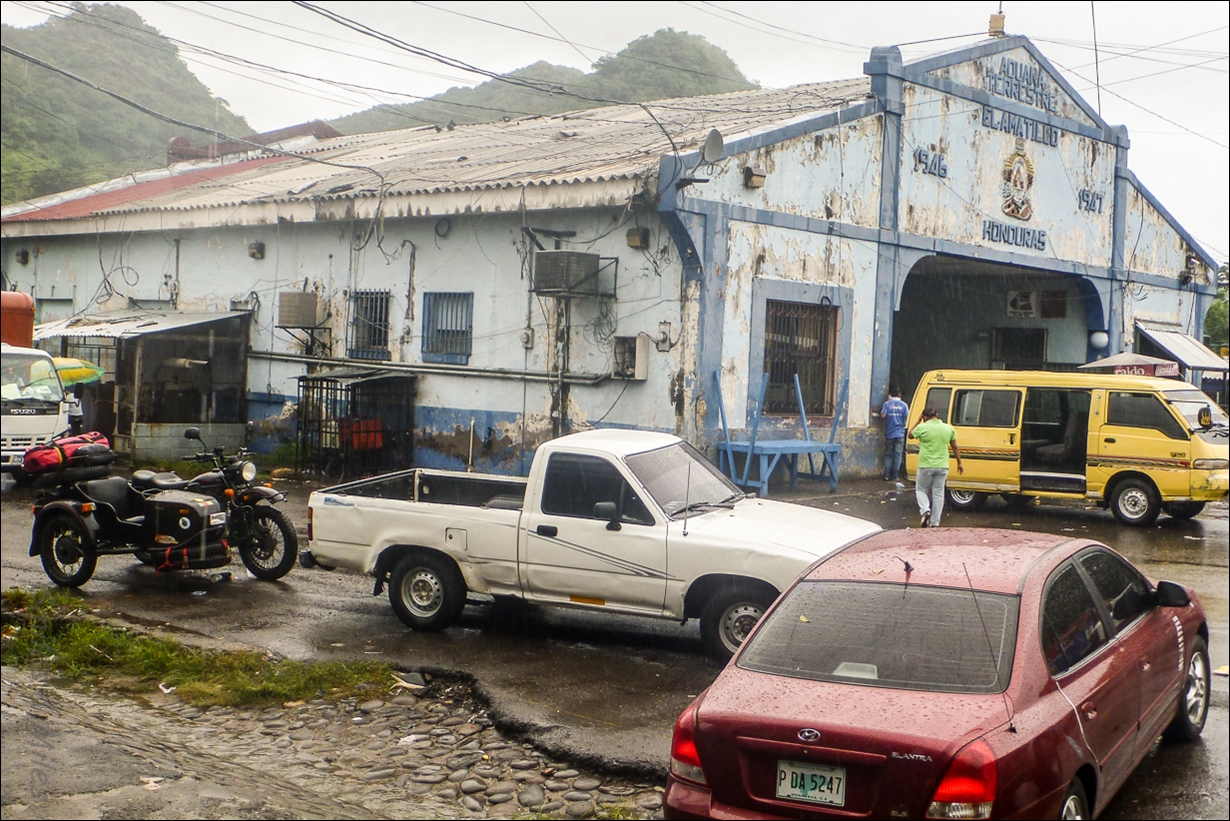
Crossing the border from El Salvador into Honduras.
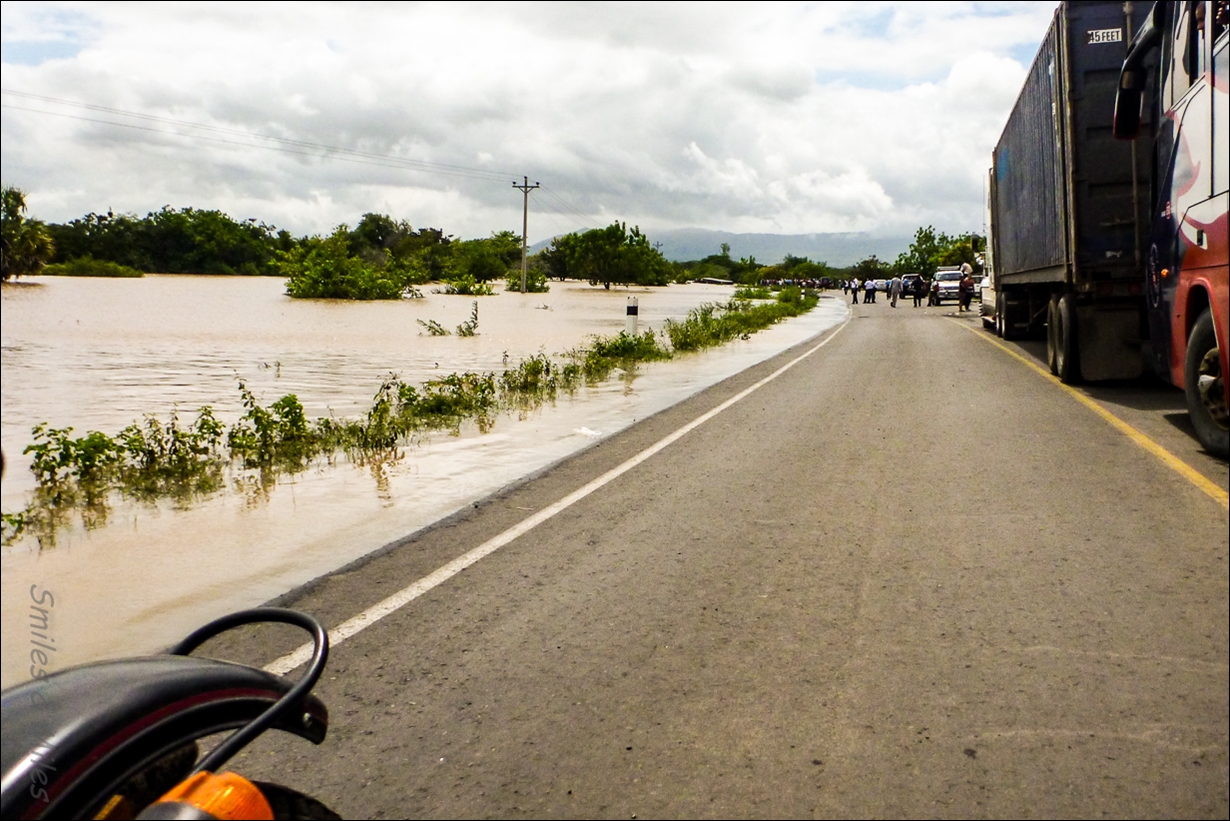
After a quick three-day tour of El Salvador and Honduras, we arrive in Nicaragua to learn that the highway has washed away and we can not get through.
Making our way along the flooded road.
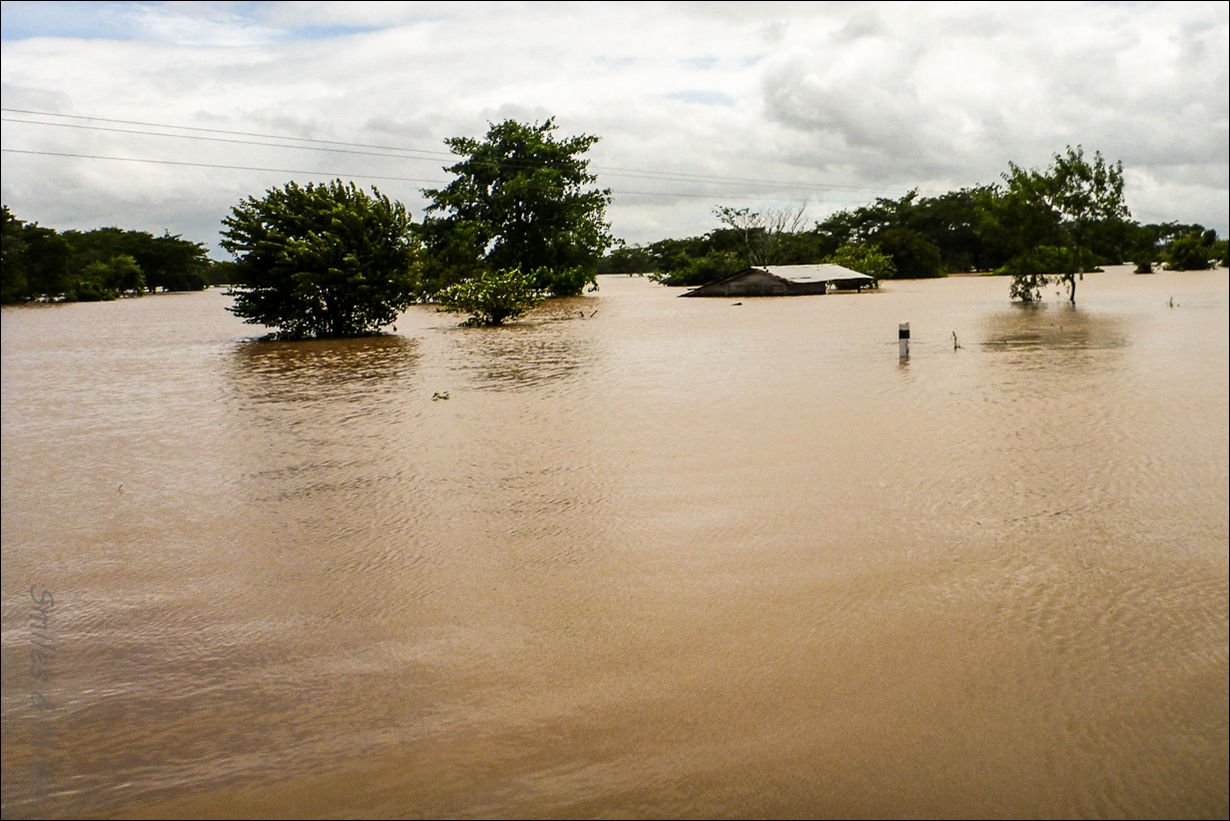
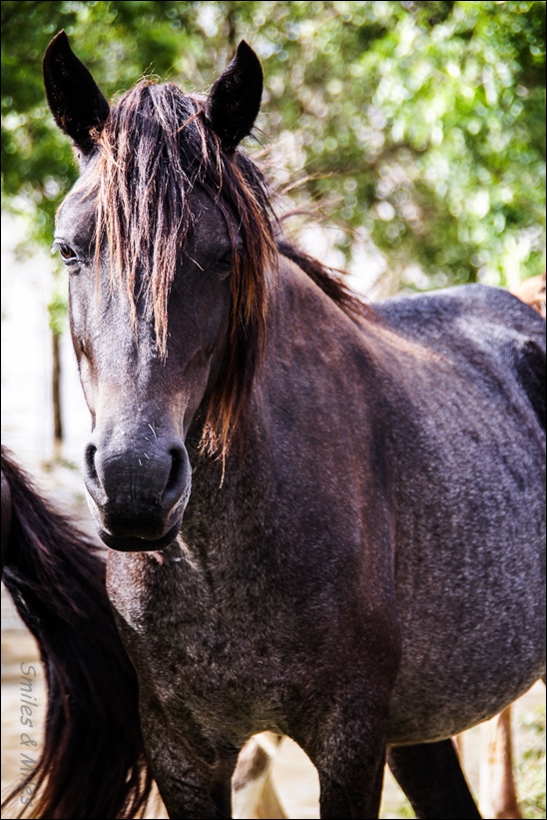
The officials stop us – “No puede pasar“. We can’t continue on the road, but we offer ”Hey, can we go up and take a picture?” “No problemo”. We work our way along the road as water floods up to the highway on both sides. It is a disheartening experience to watch this already poor population having their homes and only possessions under water and to see their animals wandering hopelessly along the road.
Homes under water.
Horses trying to find dry footing.
People continue to stop us and tell us to go back. We persevere.
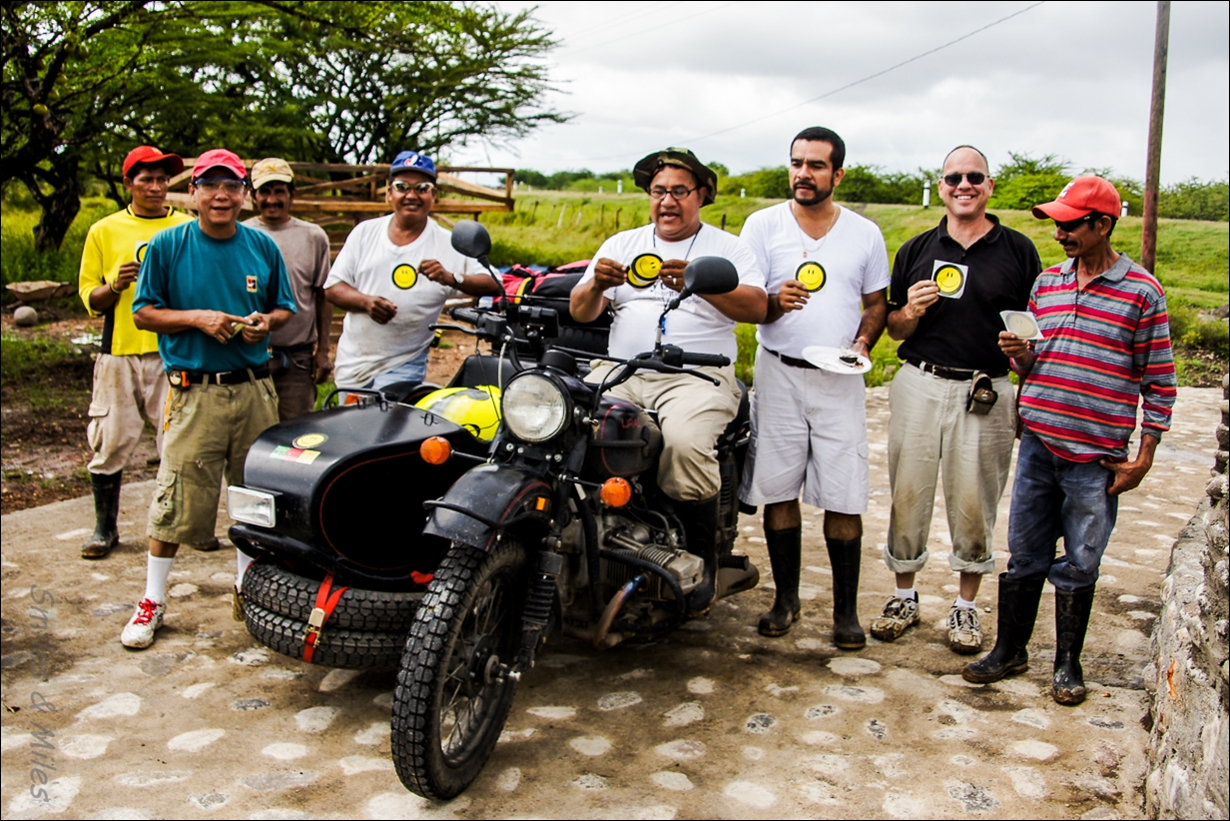
Finally a local missionary group stops us to say the road is blocked just ahead and invites us to join them for lunch. A great lunch of fresh shrimp followed by an enlightening philosophy discussion. We are continually impressed by how people are dedicating their time, skills and lives to help countries in need. Thanks to Dave Pulzetti and the crew from Beyond Partnership for welcoming us and sharing your knowledge of Nicaragua.
The crew from Beyond Partnership.
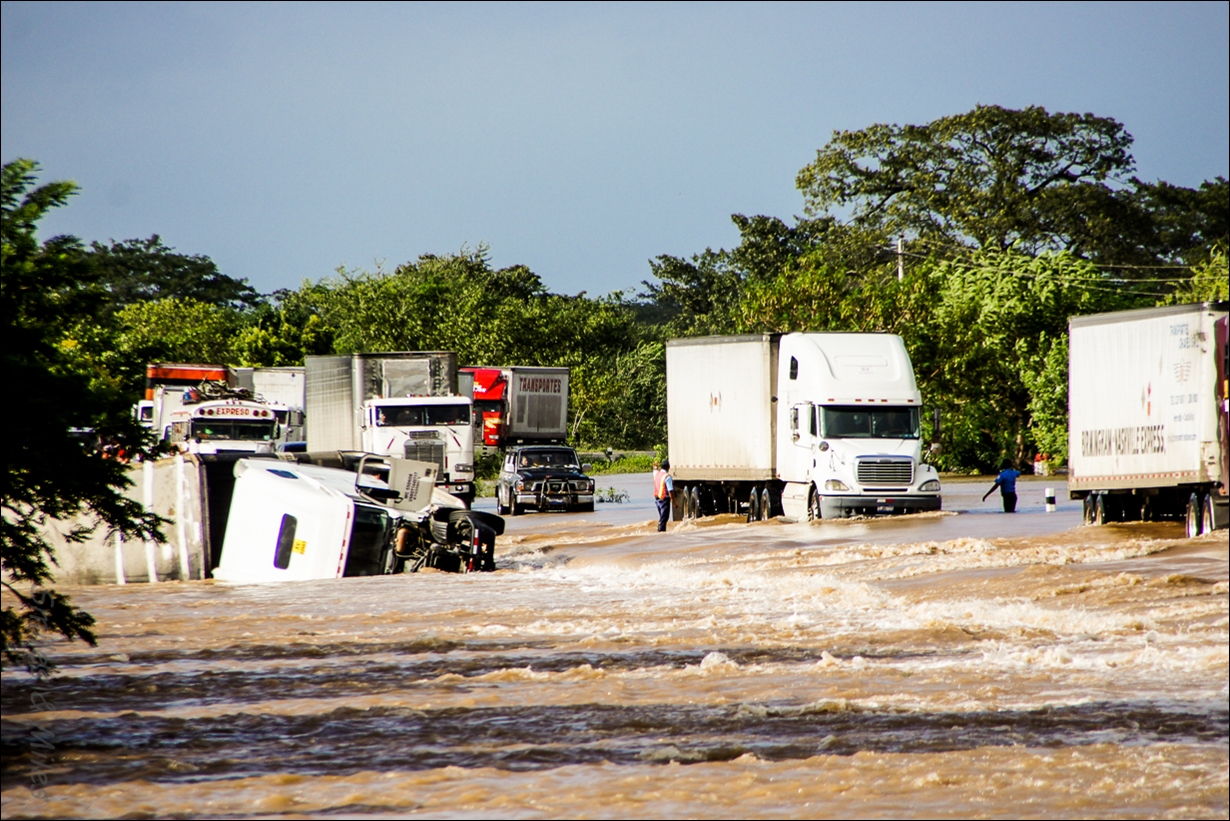
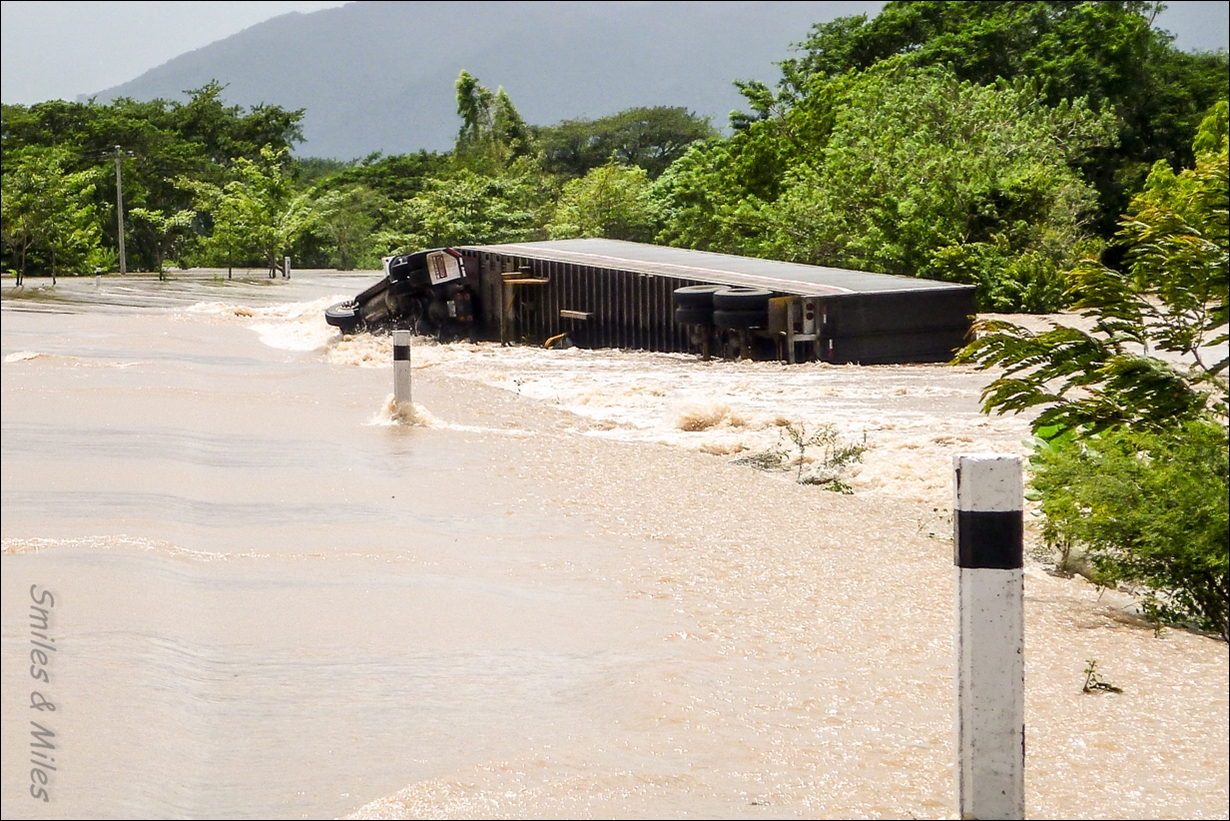
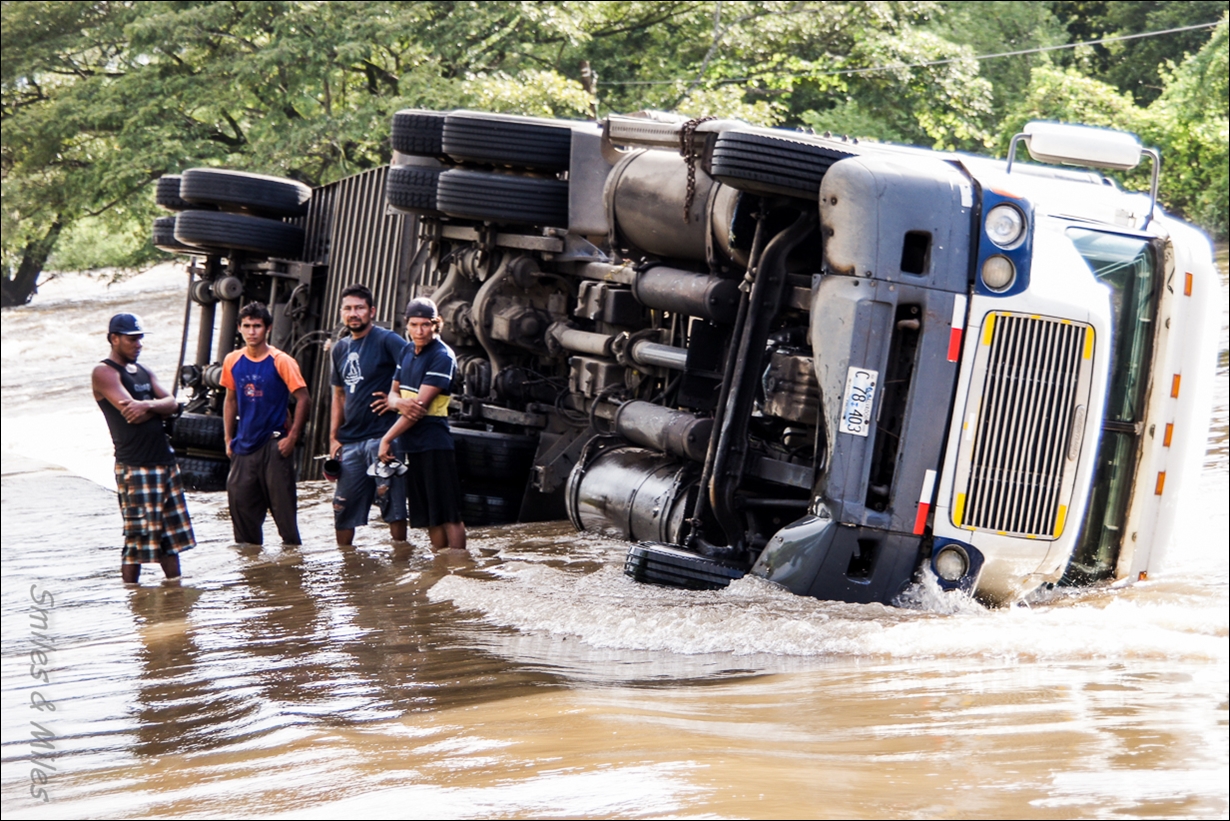
After lunch, our challenge begins in earnest. Water floods across the road and our first sight is of a full-size semi and trailer on its side, pushed off the road by the current, water rushing around and through it. The army is there, as well as curious villagers, stranded trucks, the odd bus, and now us……….
Driving to the starting point of the road closure, we notice a semi truck with a flat deck trailer waiting to get through. Guess where this story is going? In my ‘poco’ Spanish I convince the driver to let us lift the Ural onto the trailer – and make a run for it through the invisible road. He agrees, for a cost…. A whopping four dollars. Ten local villagers help us lift the bike onto the trailer, and some hop on themselves.
We make our way aboard a flat-bed trailer.
Tracey hanging on as we make our way through the deepening water.
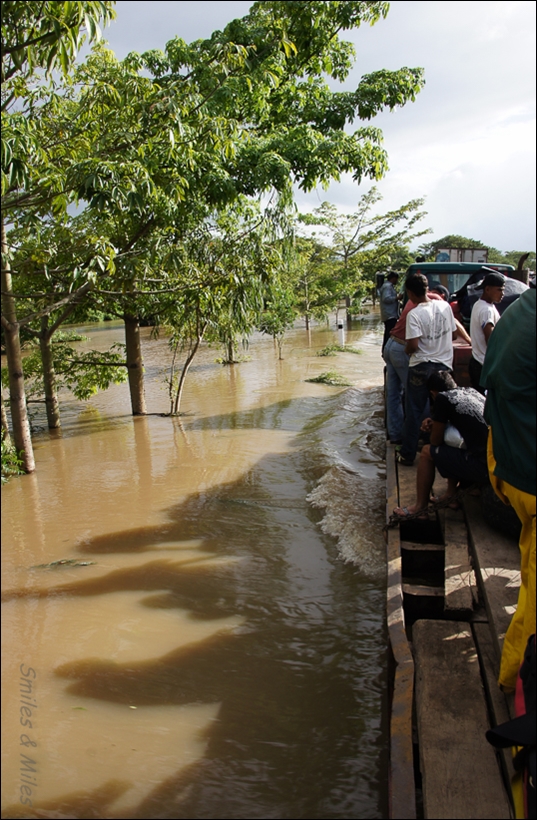
Our truck tentatively approaches the edge of the water. Two army soldiers in a commandeered local tractor probe the road ahead and lead us across a flood plain where there is nothing to see but treetops and covered homes. The water has washed away the edges and sometimes the entire lane of the road and created instant rapids and holes deep enough to swallow vehicles.
The road washing away beneath us.
We come to a guard rail sticking out of the water and realize that it is actually the railing of a bridge; the river is high enough to have covered the bank and the bridge. We pass a stranded ‘chicken bus’ and another semi on its side – this would continue for almost eight kilometers before we reach higher ground over an hour later.
Trucks crawl along on the very questionable road as they pass others who didn’t make it through.
When we reach dry land, everyone in sight lends a hand to lift the Ural off of trailer and we are on our three wheels once again, and headed for Leon.
I saw this expression on a bumper sticker in Guatemala and just couldn’t resist using it.
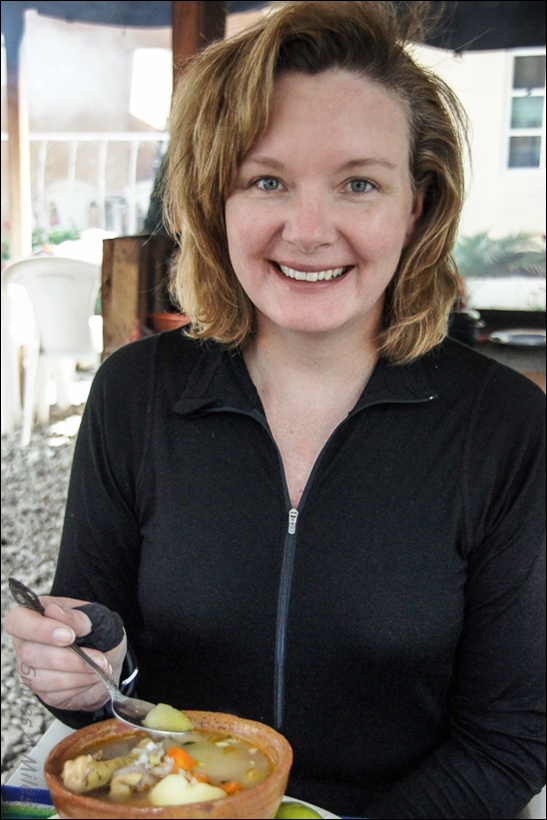
As Miles and I left Huehuetanango and began heading toward the central highlands, we stopped at the type of restaurant that has become our favourite – located on the side of the road and made up of a few small tables, plastic lawn chairs and a huge wood-fired stove, all covered by a giant blue tarp. The meal turned out to be one of our best yet. For Miles, a “Plato Tipico” consisting of heavily salted steak, plantains, cheese, a quesadilla and longaniza sausage freshly made by the chef with wonderful green herbs. For me, Chicken soup loaded with vegetables. The experience was made even better by the soft and cuddly cat who was sheltering under our table and nestled into our feet.
Tracey enjoying a bowl of good old-fashioned chicken soup – Guatemalan style.
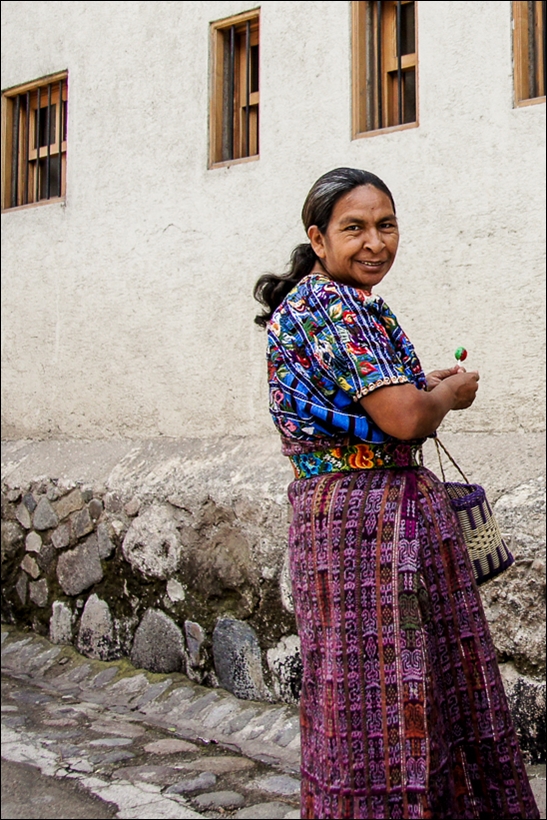
Our journey continued with a climb into heavy fog. As we were now approaching the most populated area of the country, we began to see more signs of Maya life and crafts, particularly weaving and embroidery which were obvious in the traditional dress of both women and men. The beautiful traditional clothing is made by the women in a riot of colours. Almost all of the women were in traditional dress but many men dressed similarly. Two of the most prevalent types of clothing are a corte, a piece of material 7 – 10m long that is used as a wraparound skirt by both women and men and the faja, a long woven waist sash that can be folded to hold whatever needs to be carried.
Our plan was to drive to Panajachel on volcano-ringed Lake Atitlán, considered one of the most beautiful lakes in the world. However, the road to the town had been closed for a few days so we weren’t sure we would get there. Our uncertainty grew as we approached. The fog thickened, the rain became heavier and darkness arrived earlier than expected. But the road was open so we struggled through and made it to our destination.
We spent the evening exploring the main street of the village and were followed by a couple of young peddlers who would not take “Non Gracias” for an answer. One young boy just kept asking for “one chicken” indicating that he’d be happy for us to buy him a meal if we weren’t interested in buying what he was selling. After he had walked along side us for some time, talking non-stop, Miles finally gave him some money and sent him on his way. Even during dinner, the peddling continued with three different street vendors coming right up to our table in the restaurant. Fortunately they disappeared quickly. However, the five dogs who joined us at the table were not quite as quick to respond. They came and went throughout the meal.
The next morning we woke to find Luca, the hotel guard dog, keeping a close eye on our bike as he was laid out directly behind the bike soaking up the sun.
Luca on guard.
Luca off duty.
Our morning stroll took us to some spectacular views of the lake and its surrounding volcanoes and into the Catholic church. Hidden behind its almost whitewashed exterior, the church’s interior was filled with so many flowers that the smell was intoxicating Long lengths of pink and gold fabric were draped from the ceiling creating a warm and celebratory atmosphere.
When we spotted a small chocolate shop that looked like it was straight from my favourite Johnny Depp film, I couldn’t resist a visit. I enjoyed a yummy hot chocolate and indulged in a bar of chocolate infused with cloves to be tucked away for an afternoon snack – it didn’t last until afternoon. Shunning the movie set atmosphere, Miles headed to the local grocery store for some pure Guatemalan chocolate made in San Pedro La Laguna across the lake. This was not quite as enjoyable. As Miles said, “it is a cross between chocolate, fudge, and matchbooks”. That sums it up quite well.
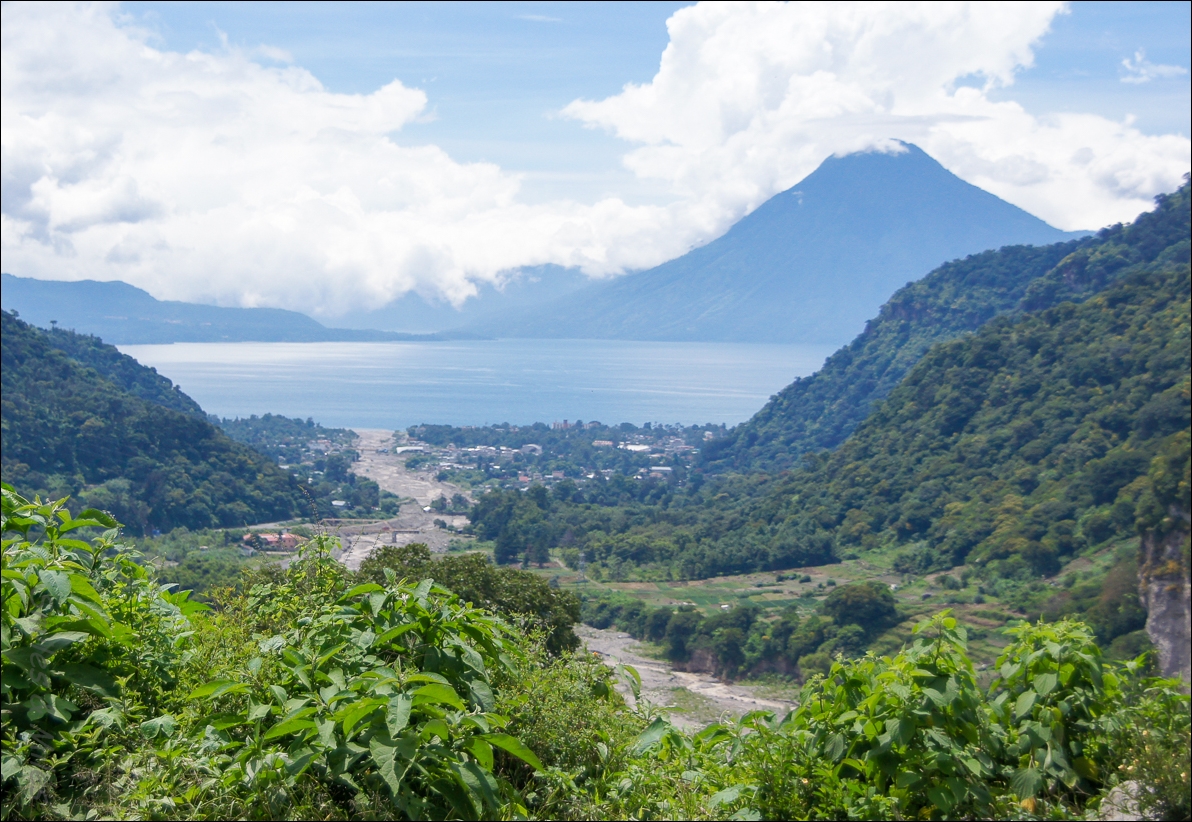
The view of Lake Atitlán as we leave Panajachel.
Travelling out of this area, we saw many examples of the typical Guatemalan home – a one-room house of brick, concrete blocks or traditional bajerequ (a construction of stones, wooden poles and mud), with roofs of tin, tiles or thatch. In the countryside, in villages, and in towns, most of the country’s Maya majority live in this type of house, grouped close to several others who make up an extended family.
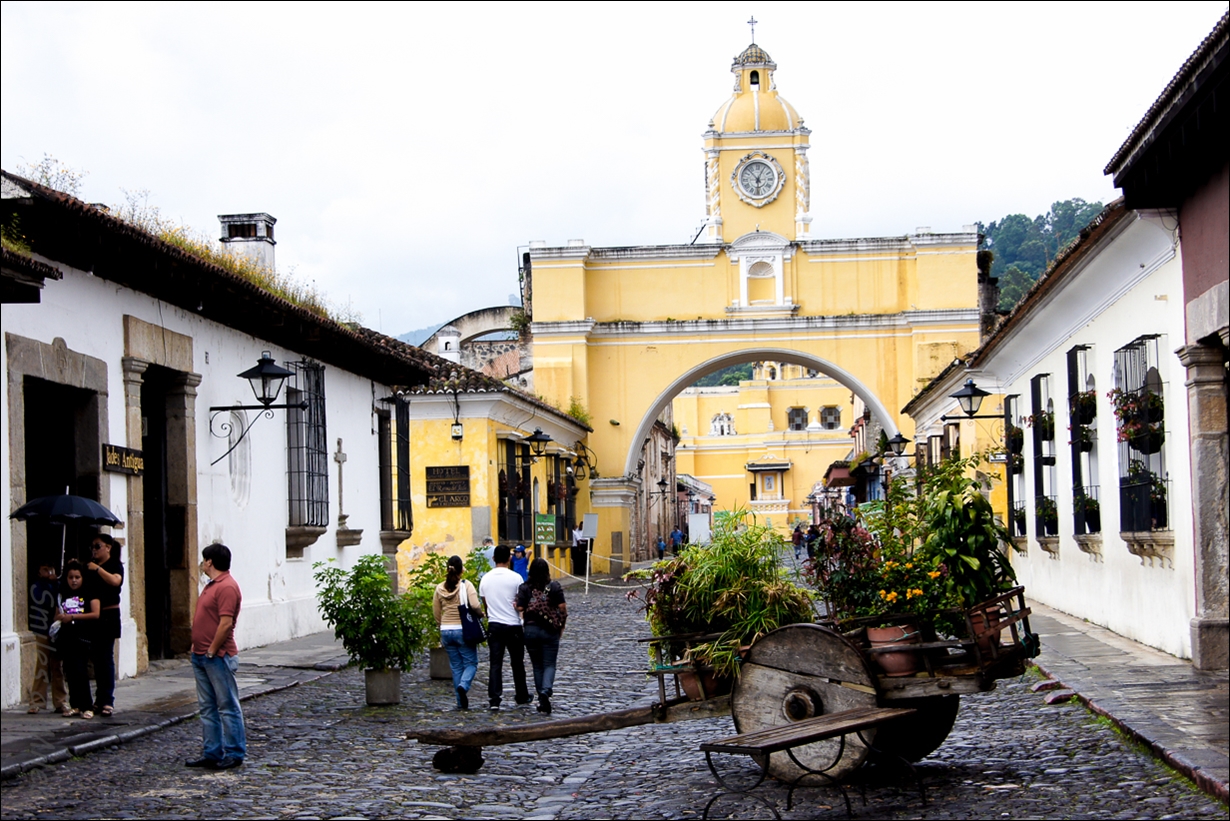
We made our next home in Antigua, nestled between three volcanoes which are clearly visible over the red tile roofs and church bell towers that dominate the small city’s skyline.
Antigua.
Antigua is an enchanting blend of colonial-era architecture and rugged cobblestone streets. The town was founded in 1543 and served as the colonial capital for 233 years. Most of the town’s buildings were constructed during the 17th and 18th centuries when the city was a rich Spanish outpost. Although not all of the buildings from this era have survived, several impressive ruins have been preserved.
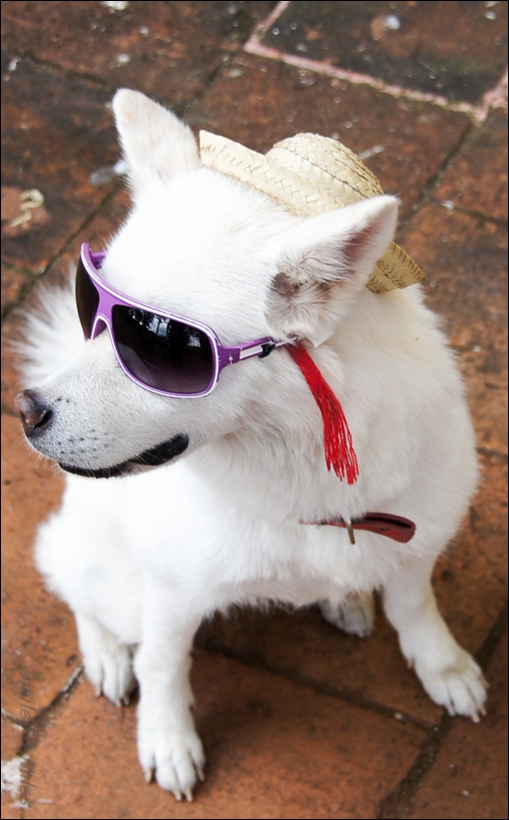
A new friend in Antigua.
Each day of our stay in Antigua, we spent time at Plaza Mayor, a popular gathering place like most central squares in Latin America. The plaza is filled with villagers selling handicrafts and shoe shining services and was a great place to grab a shady seat and watch the parade of life pass before us.
Miles getting his boots shined on the Plaza Mayor.
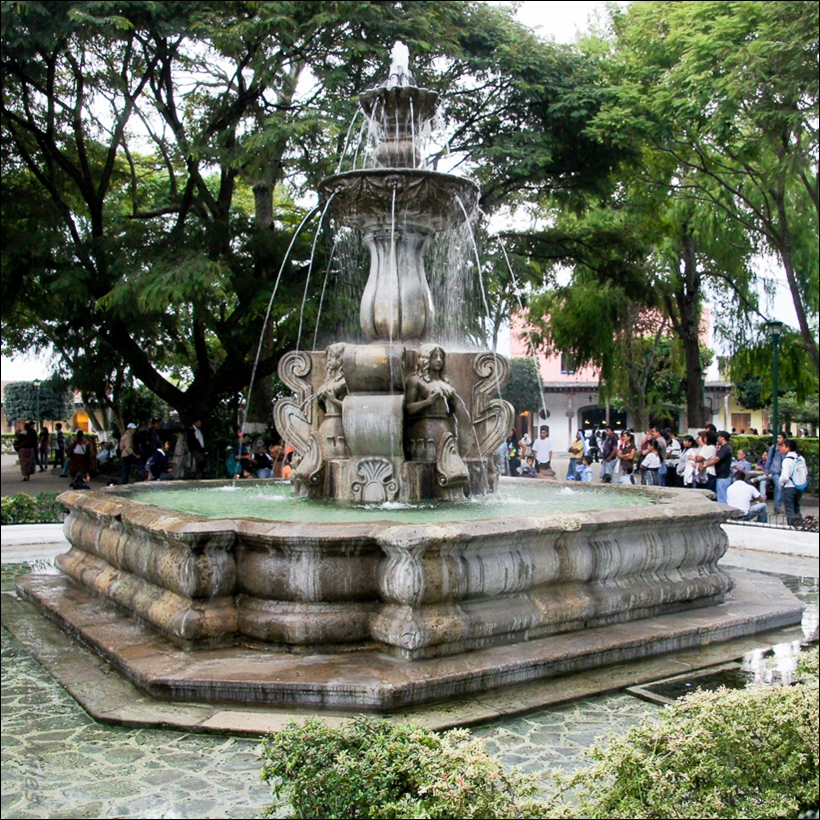
The plaza’s famous fountain has been the centre of the city since 1738. We got a kick out of the voluptuous ladies carved around the sides of the fountain and providing a steady stream of water shooting out of their breasts.
Fountain in Antigua’s Plaza Mayor.
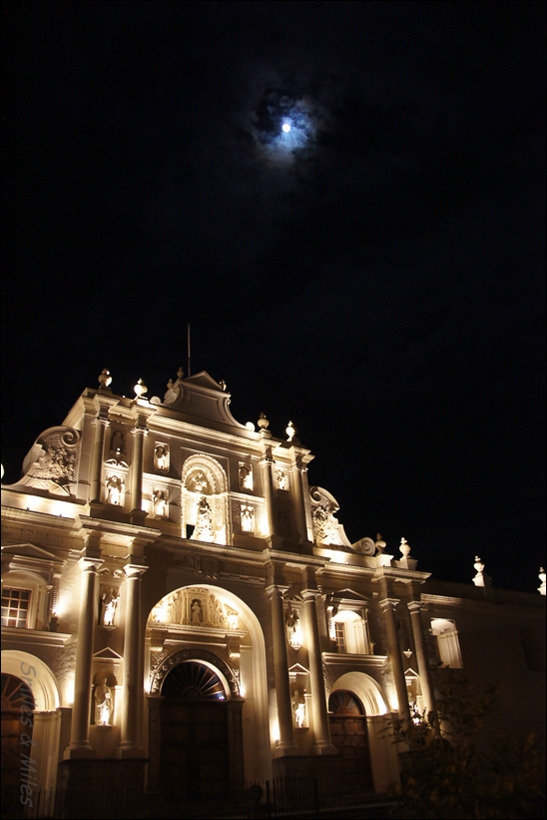
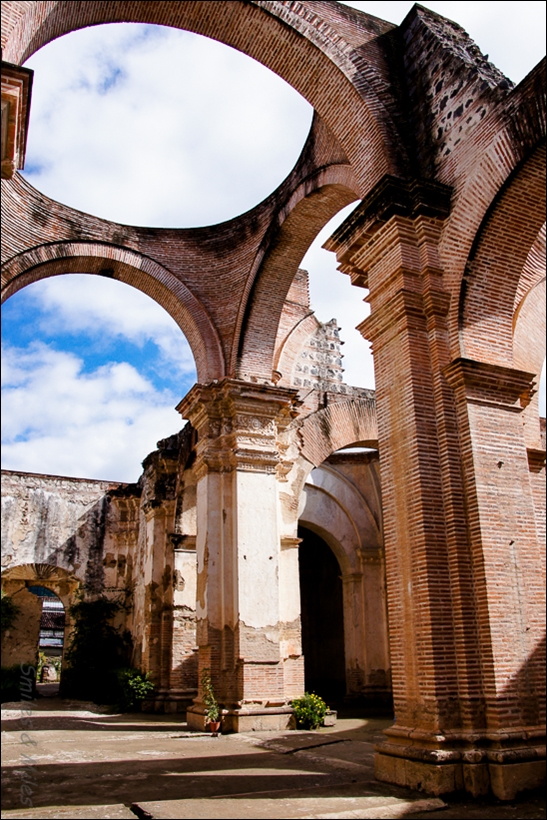
On one side of the park is the city’s cathedral with its’ ornate white façade. Only a small part of the church is currently in use and the remainder lies in ruin.
Church on Antigua’s central square.
We toured the ruins one morning with a personal guide, Armondo, who is a mason participating in the restoration of the cathedral for 6 months each year and conducting tours of the cathedral during the remaining 6 months of the year to raise funds for the restoration.
Antigua’s cathedral undergoing restoration.
On our first evening we enjoyed a dinner of typical Guatemalan dishes including kack ik, a turkey soup which seemed particularly appropriate for Thanksgiving weekend. When you order this dish, it sounds like you are gagging – “I’ll have the kack…ik” – but it’s actually delicious.
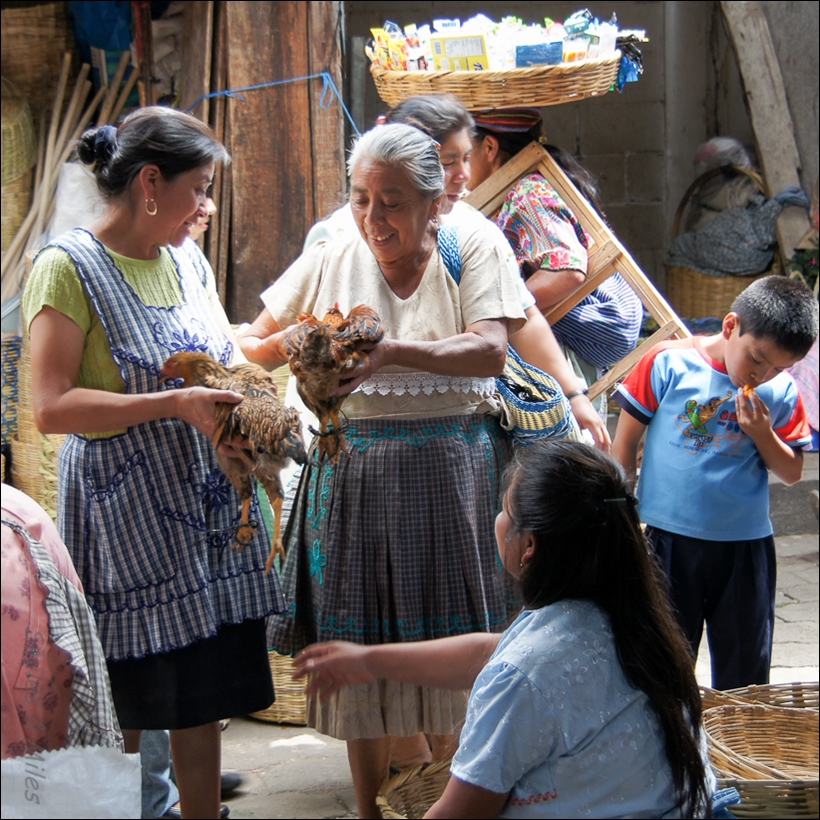
We spent the next morning wandering through the Mercado Municipal where local residents come to do their shopping among the numerous stalls connected by narrow passageways.
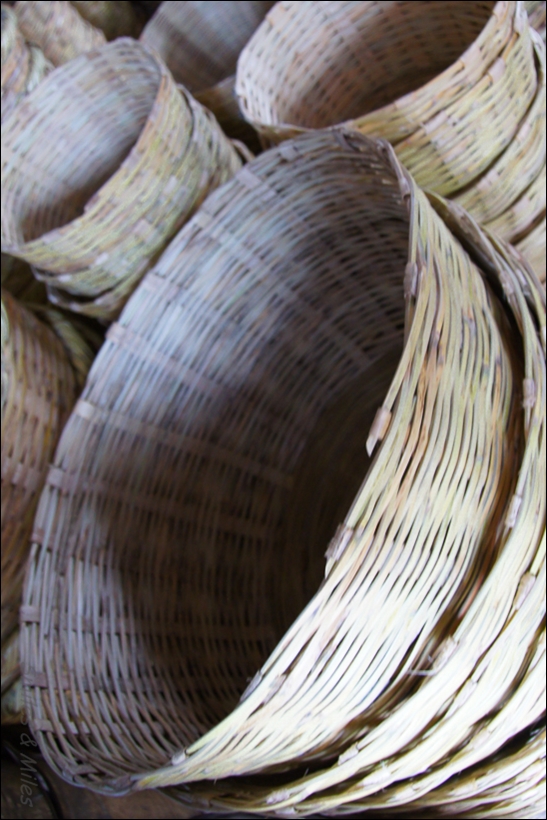
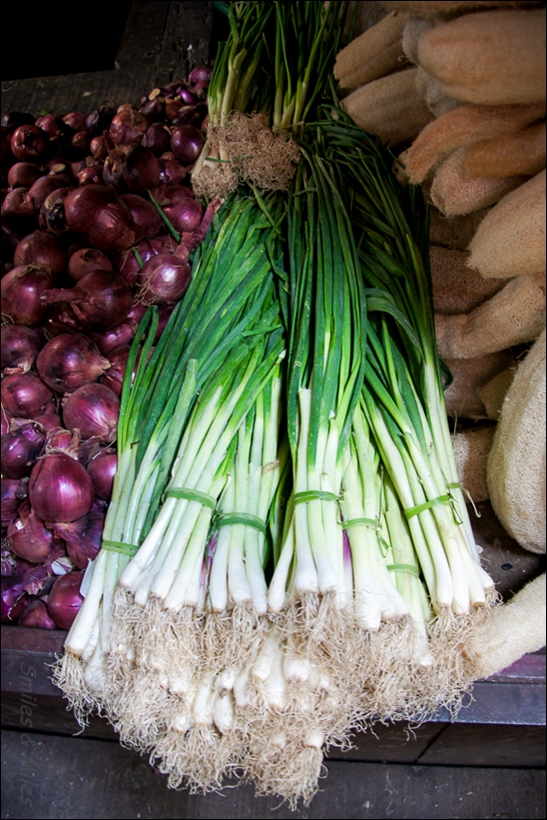
Basic household goods, flowers, vegetables, grains, spices and many live chickens are sold here along with some crafts and textiles. It was a great place to just soak in the sights and sounds.
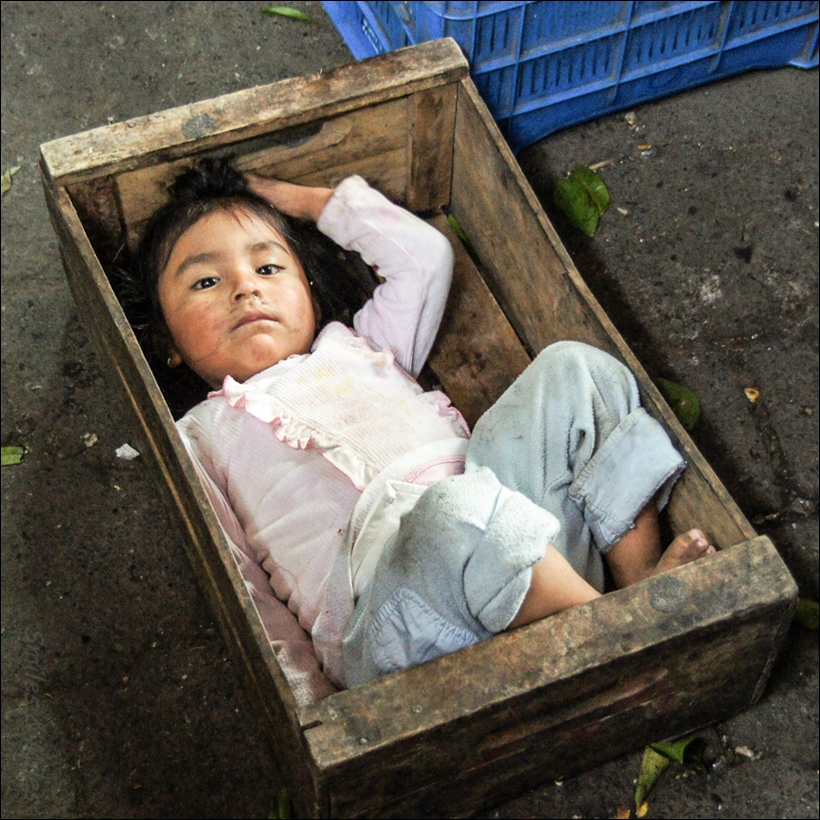
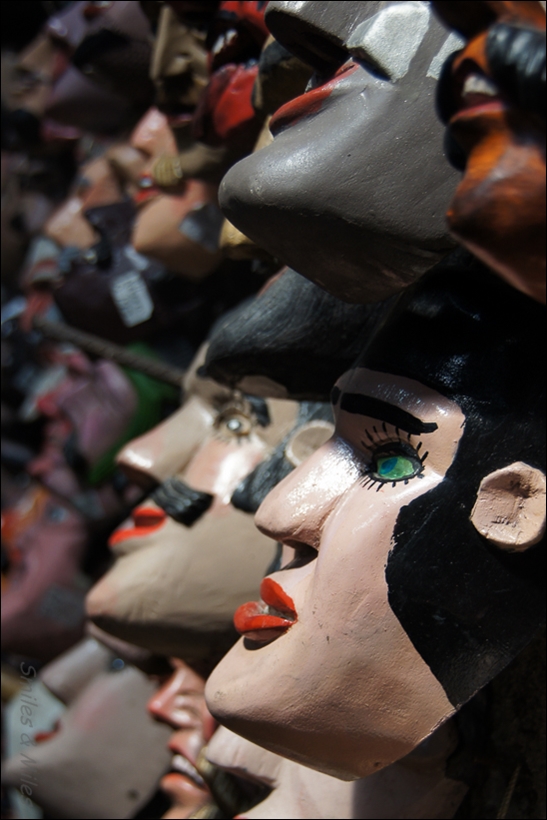
Something unexpected on display at the market.
We were once again staying in a lovely but extremely inexpensive hotel, Casa Rustica, and enjoyed meeting the hotel owner, Daryl, as well as a regular guest, Harvey Brewer, both natives of Kentucky.
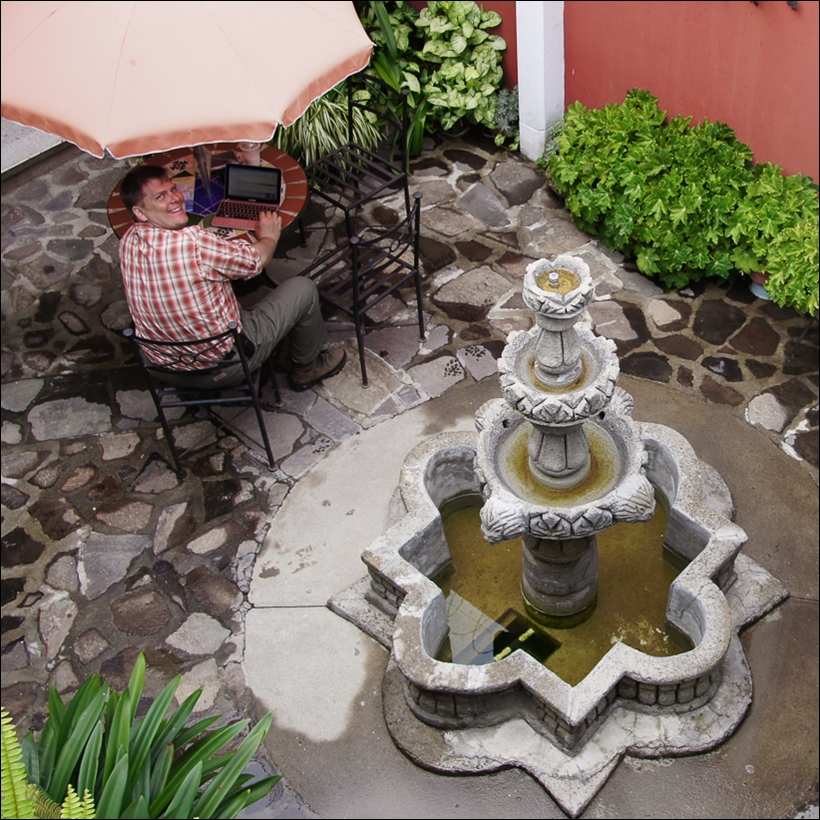
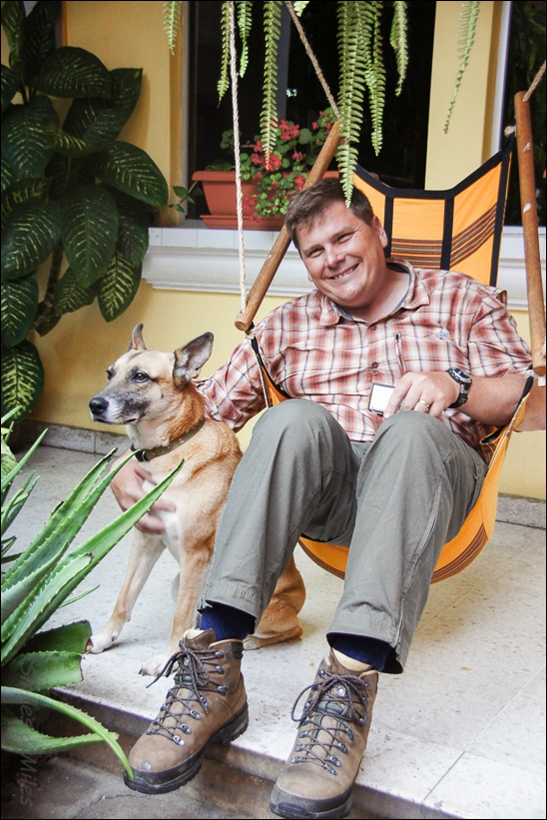
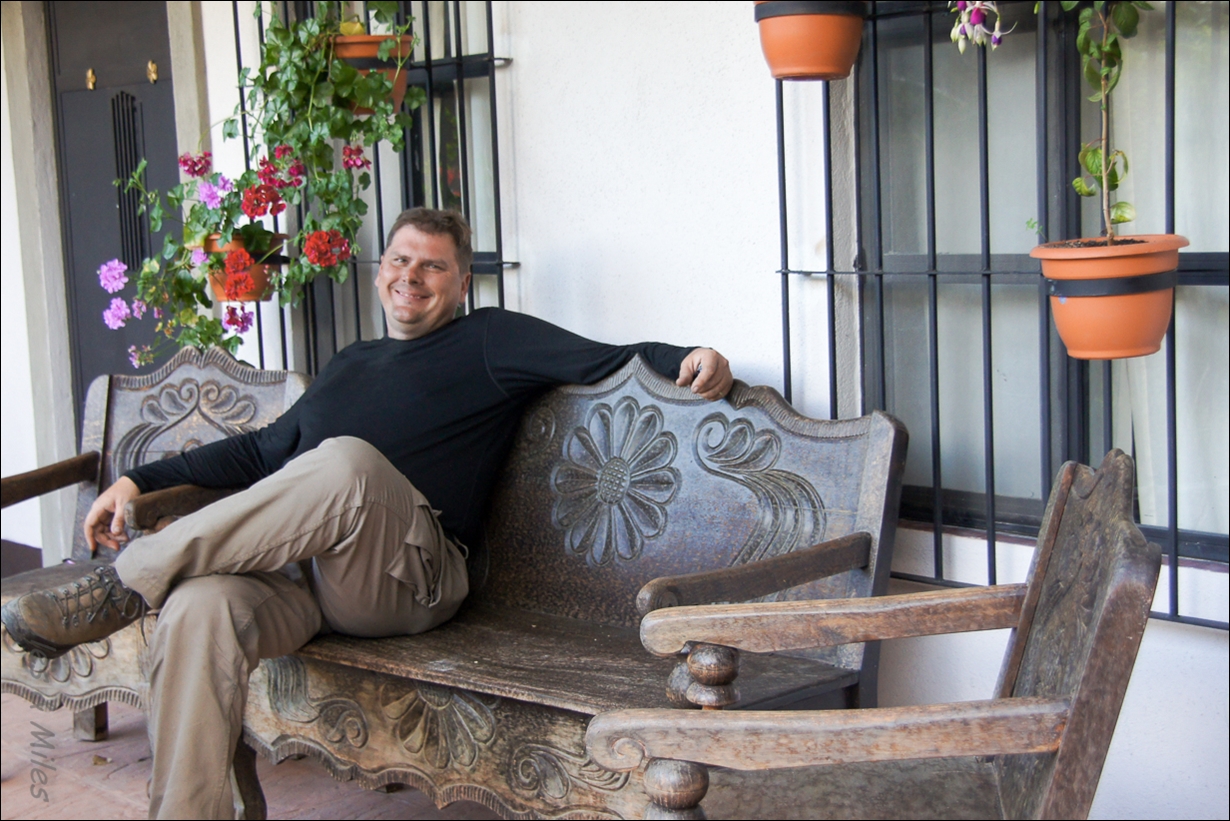
Relaxing at Casa Rustica.Relaxing at Casa Rustica.
Harvey is very involved with a medical mission based in Antigua and spends about half of each year in the city. We thoroughly enjoyed spending a rainy day with him learning about his missionary work, wandering through a craft market, enjoying the hotel’s garden courtyard, and weathering the ongoing power failures that hit the city throughout the day. This was a sign of things to come as we prepared to head into El Salvador and some severe weather.
Apparently it rains in Guatemala. Apparently it rains a lot.
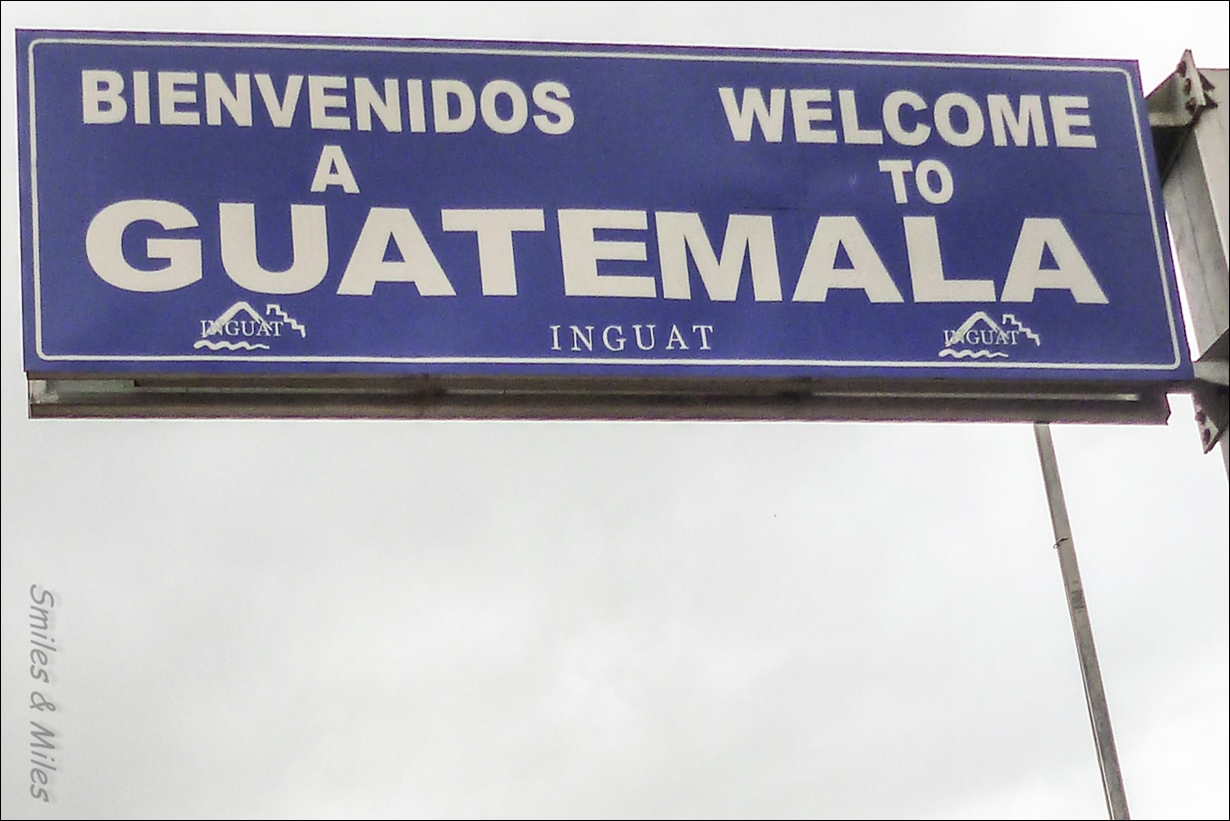
We cross the border from Mexico into in La Messilla, Guetemala and instantly the world changes.
The road is different, the architecture is different, the landscape is different.
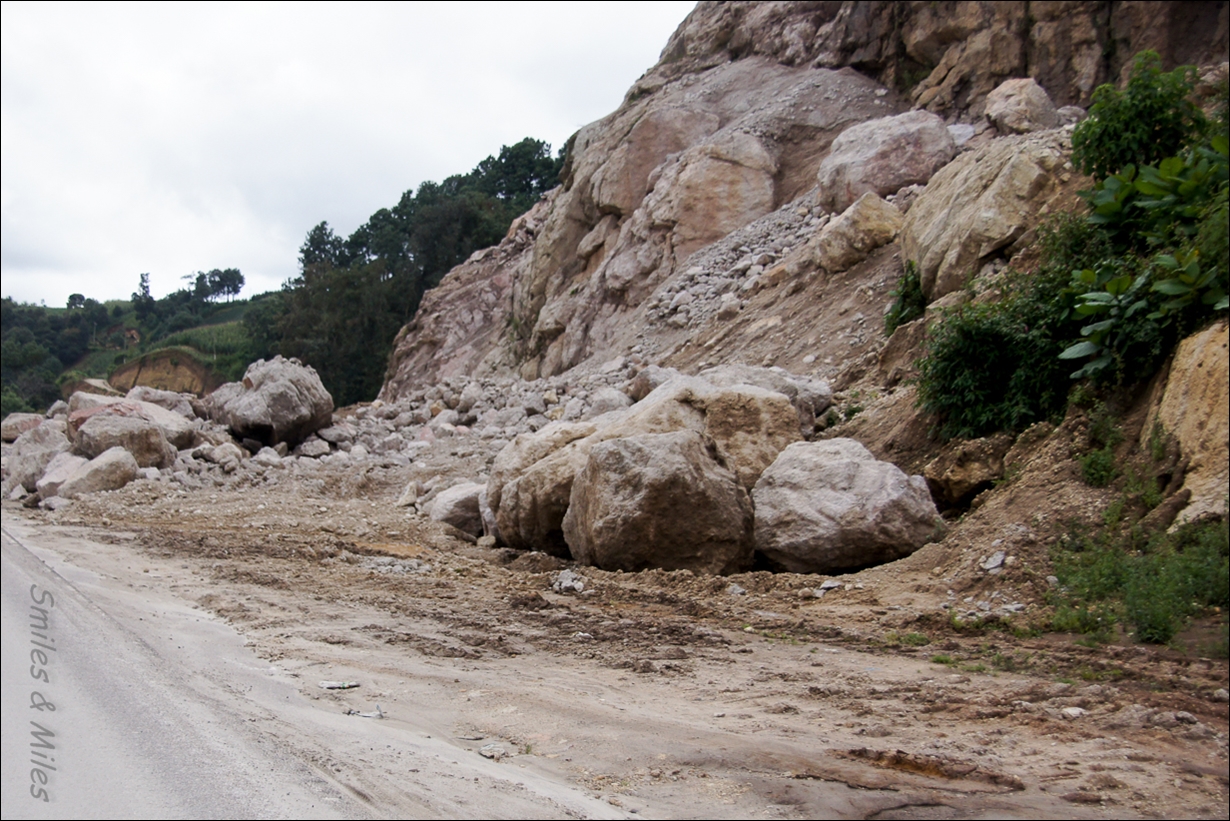
We have arrived here at the end of the rainy season. It shows. Landslides are everywhere. We scramble over at least 40 of them.
Landslide debris recently cleared from the road.
While circling volcanoes and canyons, we climb to over 10,000 feet altitude several times. Eventually we reach Huehuetenango and are met with roads ten feet wide – labyrinth-like and magically going from two-way to one-way to “No Way” with no warning. One road becomes so steep that the Ural runs out of steam and stalls. This is followed by a reverse sliding pirouette as I try to get the engine fired and get in control again, before we end up upside down.
Disaster averted, we find a spectacular hotel nestled in a hidden alley. La Chacra de Joel is a bungalow with a square garden courtyard viewed by each room.
La Chacra de Joel.Miles relaxing at La Chacra de Joel.
One unique feature is the roving guard dog on the roof, continuously repeating his route around the perimeter of the hotel. It is here that we meet the first of the many missionaries we will meet throughout Central America. Sammy Winters has been visiting and living in Huehuetenango for almost twenty years. He spends an evening with us, explaining his passions and goals – an inspiring story of creating clean water and a midwife program that has greatly reduced infant and mother mortality rates. Sammy’s message is not about ‘thumping bibles’, it is a message about doing the ‘right’ thing and helping people learn how to improve their world.
We hear this message many times from many missionaries in the coming days – missionaries who also help us to overcome some serious challenges.
Meandering through inland Mexico, we passed the third Bullfighting ring that we had seen in one morning. On the side of the road I spotted several dapper young lads in their shiny skin-tight trousers, crisp white shirts and perfectly placed ties – bullfighters-in-training. If we had been driving just a little slower I could have pulled off my red bandana and held it to the side of the sidecar to be part of the action. I would have loved to see their reaction.
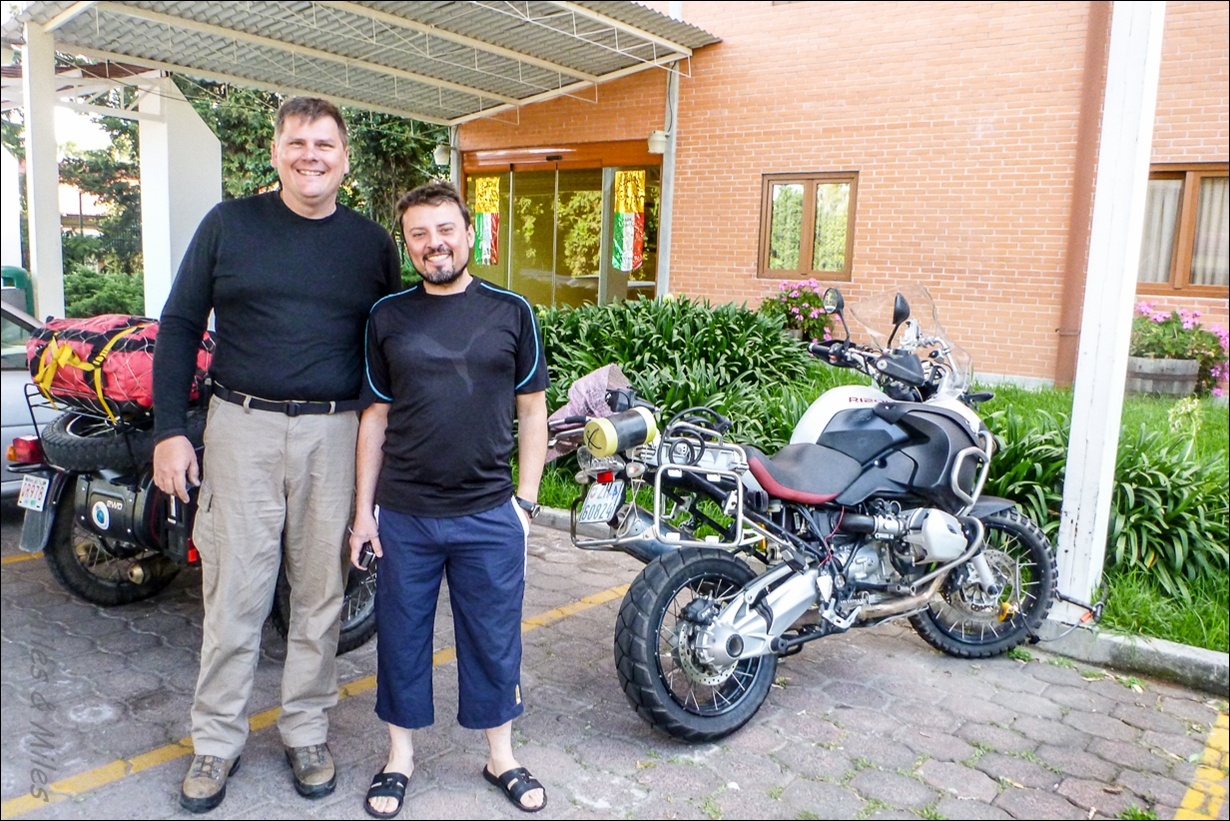
As we headed to Mexico City, we bid a fond farewell to our traveling companion, Franco. He is staying in Toluca a bit longer while he searches for someone who may be able to fix his front shocks (those darn BMWs). We are hoping to meet up again further south.
Miles and Franco – a fond farewell as we head our separate ways outside of Mexico City.
We had hoped to avoid the megalopolis of Mexico City but there was no way of escaping the city to head in the direction that we wanted to go. The city is home to an estimated 22 million people, approximately a fifth of the country’s population. Mexico City was everything that we had expected – its size was daunting and as we struggled to find our way out we felt that the urban sprawl would never end. Our views became increasingly dramatic as we headed east of the capital, the landscape covered with volcanoes and eventually becoming a cactus-strewn desert.
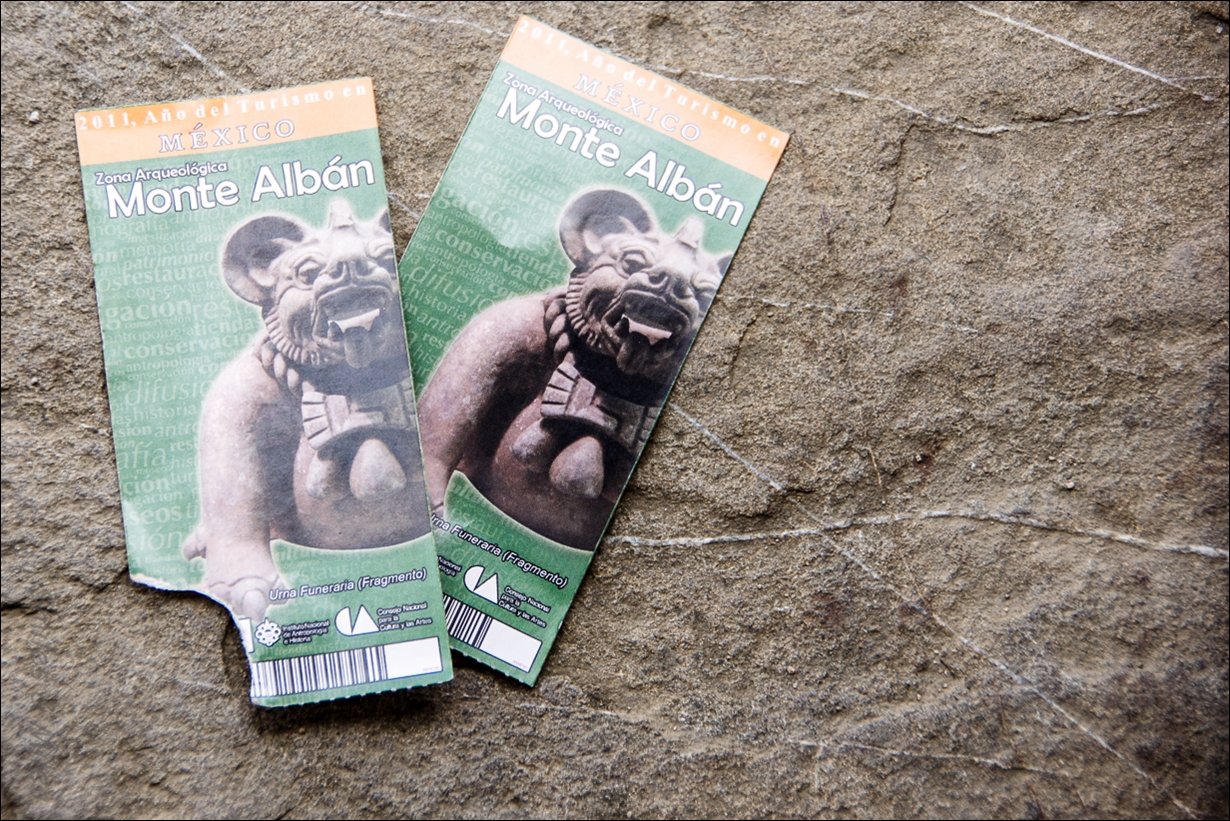
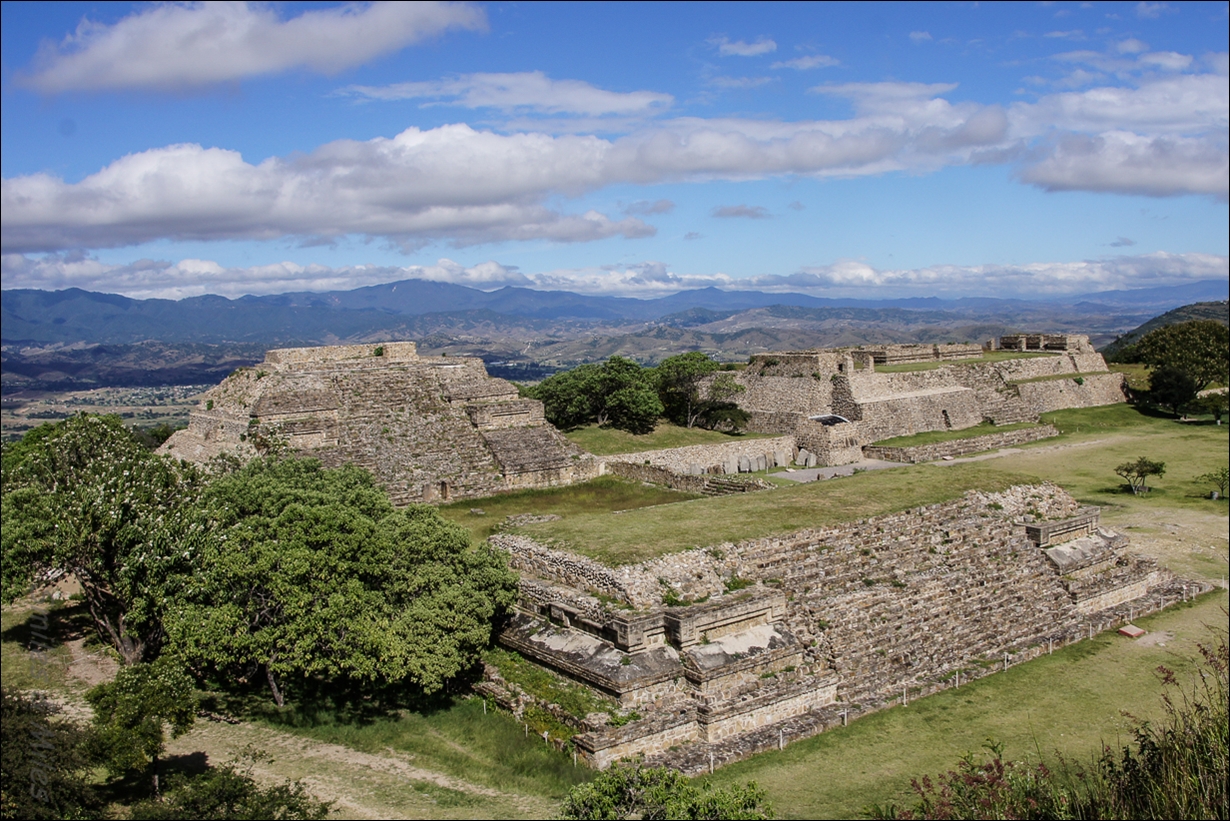
While in Oaxaca we visited the ancient Zapotec capital of Monte Alban, standing on a flattened hilltop 400m above a valley floor.
Although we had previously visited similar ruins in Chichen Itza on a previous trip, the ruins at Monte Alban seemed even more spectacular because of the location, surrounded by dramatic valley and mountain landscapes.
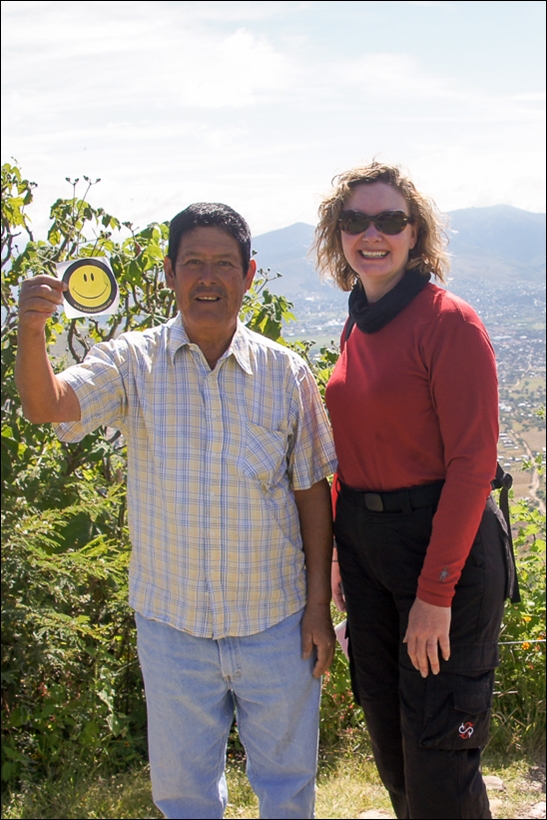
Despite many signs throughout the ruins indicating that vendors could not sell their goods in this area, peddlers were approaching us at every turn. Unlike our experiences with peddlers at so many other historical sights around the world, this experience actually ended on a high note. Each of the peddlers immediately stopped their sales pitch as soon as we said “Non Gracias” and the conversations shifted to a combination of a history and geography lesson for us or an opportunity for these indigenous craftsmen to practice their English on us. We enjoyed hearing about the skills required to craft their wares, seeing them point out the location of their villages in the surrounding valleys, and learning first-hand about the Zapotec culture.
Tracey sharing a Smiles & Miles sticker with a local artisan.
South of Oaxaca we began to pass through fields of agaves. We had entered the area of the country where the majority of mezcal is produced. Mezcal, a distilled alcoholic beverage similar to tequila is made from a form of agave plant. There is a saying attributed to Oaxaca regarding the drink: “para todo mal, mezcal, y para todo bien también” (for everything bad, mezcal, and for everything good, too.) The smell in this area was so strong that you may become intoxicated simply by passing through.
High in the hills of Oaxaca we approached yet another road construction sight. The flagman waved us forward and then held back the remaining traffic.
Roadblock flag man.
As we headed forward, we saw that he flagman was holding back traffic at the other end, leaving us the only travelers in the construction zone. Suddenly all of the workers began rushing toward us. This wasn’t looking good. When one of the workers hopped onto the side of the side car, put his arm around me, flashed me a huge smile and asked me to take his picture, I recognized that this was a roadblock of a different kind. These workers were so intrigued by the Ural that they simply wanted to create a quick break from their work so that they could all come and take a closer look. We shared a few laughs and chatted in our broken Spanish before they finally decided that it was time to get back to work and set us free to continue our journey.
Our party with the road crew.
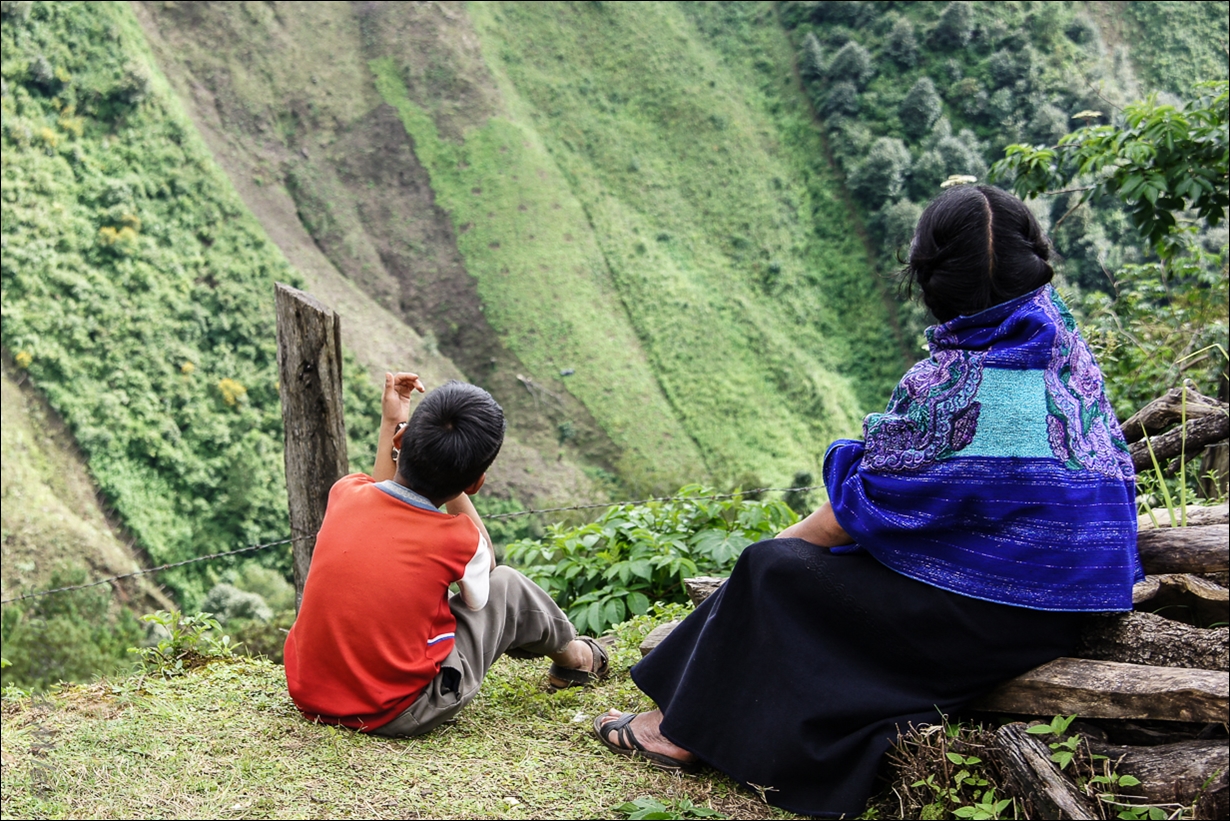
Moving from Oaxaca state into Chiapas, we climbed even higher into the cloud forests inhabited by modern Maya in their colourful and elaborate native dress. Many of the indigenous communities that we entered rely on subsistence farming and have no running water or electricity. We truly had a feeling of entering a past time. At the height of the rainy season, the buildings in one of the villages were heavily flooded. It was heartbreaking to see the church that represents the centre of the community drowned under eight feet of water.
Having now traveled 4,000 km through Mexico, we had seen none of the frightening corruption or violence that we heard so much about. In fact, we were disappointed that we needed to leave so quickly and are anxious to return. We are now continuing south, searching through the fog for the Guatemala border.












 Smiles & Miles